

Cost Pressure & the Impact On Value
“Revenue recovery happens fastest where commercial strategy, operational discipline and financial control are aligned.”(Assured Hotels blog - Hotel Revenue Management as a Turnaround Lever for Summer 2026)
Why Cost Pressure Isn’t Going Away — And What It Means for Trading, Value and Owner Optionality
For many owners, the summer period brings a familiar sense of relief: strong leisure demand, healthy cash at bank, and a temporary focus on the busy operation rather than financial firefighting that has dominated the rest of the year. But by mid‑September, that seasonal spike is over — and the underlying cost pressures that have been eroding margins all year will re‑emerge with full force when looking at autumn and winter cash flows.
The challenge is simple: cost pressure isn’t cyclical anymore. It’s structural. And unless owners and operators act now, it will continue to damage trading performance, reduce asset value, and limit strategic choice heading into 2027.
-
The Myth of “Temporary” Cost Pressure
Every year, the summer uplift creates a natural “head‑in‑the‑sand” moment. Cashflows look better, occupancy is strong, and the instinct is to wait until autumn to address deeper issues. This is particularly true in a strong “staycation” year such as 2026 is proving to be.
But this confidence is often misplaced. As we noted in our spring newsletter focused on revenue management:
"Summer is no longer a guaranteed high‑water mark — it’s a competitive battleground where disciplined management determines who wins." (Hotel Revenue Management as a Turnaround Lever for Summer 2026)
The seasonal spike may feel reassuring, but it doesn’t change the fundamentals:
- Labour costs have reset at permanently higher levels
- Energy volatility with increasing non‑commodity/ green costs is now a constant operating risk
- Insurance and compliance requirements remain complex and increasingly scrutinised
- Supply chain consolidation reduces bargaining power
- Financing costs have structurally shifted upwards and will stay there
Even strong summer trading cannot offset these pressures. Margins do not recover on their own.
-
The Structural Cost Drivers That Will Define 2026–2028
Labour Inflation Is Baked In
Wage & tax floors, recruitment scarcity, and agency reliance mean labour cost ratios will not return to pre‑pandemic norms.
Energy Volatility Is Permanent
Hotels face unpredictable spikes that hit GOP instantly, with businesses footing a higher net‑zero bill in non‑commodity cost levies than consumers. What is happening to non-commodity costs?
Insurance & Compliance Costs Are Volatile — But 2026 Premium Reductions Create an Opportunity
Insurance has been one of the most unpredictable cost lines for hotels in recent years, with premiums rising sharply post-pandemic. But 2026 has seen reductions across several categories, particularly for well‑managed assets with strong compliance records.
This creates a window to lock in savings through structured review and brokerage support:
- Reassessing cover levels to eliminate under‑insurance risks and remove legacy over‑insurance
- Consolidating policies to reduce duplication and frictional cost
- Leveraging improved risk profiles following operational stabilisation
- Securing multi‑year rate protection through competitive brokerage
- Strengthening compliance documentation to increase insurer confidence
With the right approach, insurance becomes a margin‑protection lever, not a cost‑pressure risk. Our brokerage partners specialise in hospitality portfolios and adopt the same consultative, no‑obligation review model as AH — helping owners maximise these reductions without compromising cover. Is insurance the new hotel dealbreaker? | Hospitality Investor
Supply Chain Consolidation Reduces Flexibility
Fewer suppliers managing their own cost implications, higher minimum orders, and reduced negotiation leverage all push cost of sales upwards.
Financing Costs Have Reset
Refinancing at 6–7%+ is now standard, across a much smaller pool of banks and financial options. This directly affects cashflow, capex capacity, and exit timing.
These are not temporary headwinds. They are the new operating reality.
-
The Impact on Trading: Margin Erosion Even in “Stable” Hotels
This is the part owners often miss: Revenue can be flat or slightly up, but GOP margin can still fall 3–8 percentage points.
Examples from recent AH projects:
- Labour model redesign delivering a 6% GOP uplift
- Procurement consolidation reducing cost of sales by 8–12%
- Energy optimisation saving £40–£60k annually
These improvements aren’t theoretical — they’re achievable, but only with structured intervention. See our recent turnaround at Middleton Hall Hotel & Spa for a real‑world example of margin recovery and operational stabilisation, even in a small operation with limited cost opportunities. Middleton Hall Estate - Assured Hotels
-
The Impact on Value: Cost Pressure Directly Reduces Asset Worth
Operational cost pressure translates directly into asset value erosion:
- Lower GOP → lower EBITDA
- Lower EBITDA → lower valuation
- Lower valuation → reduced refinancing & options
- Reduced refinancing options → forced decisions (sell, hold, renovate)
This mirrors the themes highlighted in the 2026 transaction landscape: PIPs are more expensive, debt maturities are tightening, buyers are more selective, and midscale assets are most exposed.
Owners who ignore cost pressure risk entering 2027 with fewer choices and higher risk.
-
The Impact on Optionality: Cost Pressure Limits Strategic Choice
Optionality is the language of lenders, investors and advisors. Cost pressure reduces all three strategic paths:
- Hold: Only viable if margins are stabilised
- Renovate: Only viable if cashflow supports capex
- Sell: Only viable if value hasn’t already eroded
Owners who act early preserve optionality. Owners who wait will lose it, particularly in the wider sluggish transactional market. Savills UK | 2026 Hotel Sector Outlook
-
The Solution: Operational Intervention Before the Autumn Dip
With the seasonal spike ending in mid‑September, now is the moment to prepare for Q4 and 2027.
In addition to creative strategies for growing sales and operational best practice, Assured Hotels provides:
- Cost and margin reviews
- Labour optimisation
- Procurement consolidation
- Energy strategy
- PIP exposure assessment
- Refinancing scenario modelling
These interventions work because they are delivered within a fully integrated turnaround framework — linking commercial strategy, operational discipline and financial control. Cost pressure cannot be solved in isolation; it must be addressed alongside revenue, labour deployment, procurement, overheads, and cashflow planning.
But crucially — we don’t operate in a hotel‑skills silo.
-
Our Partnership Programme: Broader Support for a More Complex Cost Landscape
Cost pressure is no longer limited to hotel operations. Owners need broader support across multiple cost categories — and AH has built a partnership programme to deliver exactly that.
Across:
- General supply procurement
- Insurance and risk
- Capital allowances
- Energy and sustainability
- Technology and automation
Our partners adopt the same consultative, no‑obligation approach as AH:
- A free/ no-obligation review of potential savings or value opportunities
- Clear alignment with AH’s financial models
- Seamless integration into turnaround plans
- No pressure, no commitment — just clarity of opportunity and benefit
This programme is expanding, with new partners being added to Our Partners page. It strengthens the ability to deliver value protection across the full cost base, not just the operational business.
-
Closing: Cost Pressure Isn’t Going Away — But Value Erosion Is Preventable
The summer uplift will fade. Cost pressure will remain. And owners who act now will enter autumn with stronger margins, clearer options, and protected value.
The next four weeks are the ideal window to review cost exposure, stabilise trading performance, and prepare for the strategic decisions that 2026 will demand.
Book a Cost & Margin Review Before the Autumn Dip
If you’d like to understand how cost pressure is affecting your trading performance, asset value, and strategic options, we can arrange a no‑obligation review supported by our expanded AH Partner Network.
This includes:
- A full operational cost and margin assessment
- A review of energy, insurance, procurement and capital allowances opportunities
- Integration into AH’s financial models and turnaround planning
- Clear recommendations before the seasonal spike ends
Secure your review now and enter autumn with clarity, control and stronger value protection.
Please click here to book a meeting, email info@assuredhotels.co.uk or call 0203 916 5658.


Fully Resourced Hotel Turnaround That Restores Control, Credibility and Value
Fully Resourced Hotel Turnaround
The hotel transactional market is starting to move again, creating opportunities for owners to leverage expert turnaround plans to maximise value and increase options - Proof is the new leverage in hotel transactions | Hospitality Investor.
Underperforming hotels don’t need theory — they need decisive action. Assured Hotels delivers a fully resourced turnaround solution that unites commercial strategy, operational discipline, and financial control to restore performance at pace. Our independent, multi‑disciplinary interventions stabilise trading, strengthen reporting, and give stakeholders the clarity required to support refinance, restructuring, or exit.
Recent case studies show how our integrated approach — spanning revenue management, sales and marketing, operational oversight, cost control, and back‑office governance — provides the structure and commercial engine required to improve owner options.
Assured Hotels are also uniquely positioned to bring capital‑backed solutions, partnering with trusted finance providers to fund essential investment and catch‑up projects that unlock trading performance and sustain value growth.
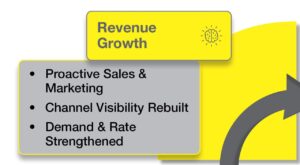
Revenue Management: Rebuilding Visibility, Demand and Rate Strength
A 31‑bedroom hotel in administration suffered from weak pricing, poor digital visibility, and over‑reliance on leisure trade. Assured Hotels implemented a focused revenue strategy:
- Improved OTA visibility through structured room types, refreshed photography, and clearer rate plans.
- Introduced dynamic pricing with demand‑driven models and daily reviews.
- Expanded distribution, including GDS onboarding and renewed corporate agreements.
- Strengthened direct bookings by clarifying offers and streamlining user journeys.
- Developed segmented products for corporate and leisure markets.
This repositioned the hotel to attract higher‑value guests, strengthening occupancy and rates.
Sales & Marketing: Putting the Hotel Back on the Map
With no active sales plan, corporate accounts lacked awareness and MICE planners had no visibility of facilities. Assured Hotels delivered:
- Audit of lapsed and potential accounts
- Re‑established preferred agreements
- Targeted outreach to MICE planners
- Campaigns to drive business and leisure demand
- Improved rate parity and booking pathways
Outcome: The hotel regained visibility, credibility, and market share across key segments, driving rapid topline growth.
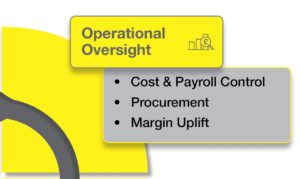
Operational Oversight: Cost Control and Efficiency
A 150‑bed West Country hotel lacked systems to control payroll, food and beverage cost, and purchasing. A system review introduced:
- Forecast‑aligned payroll models
- Purchase order controls and supplier nominations
- Menu and pricing reviews
- Regular stock takes and variance checks
Results included payroll aligned to benchmarks, stabilised cost of sales, improved cash margin, and increased profitability without compromising guest experience.
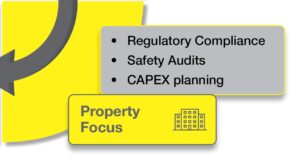
Property Management Expertise
For an 80‑bed independent hotel on the south coast, we agreed a comprehensive property‑management approach that prioritised asset improvements which had been neglected and long‑term commercial resilience. Our team supported on site management to strengthen the hotel’s compliance position, tightened safety standards, and introduced a structured programme of planned investment to maximise revenue growth.
Alongside day‑to‑day oversight, AH then oversaw all CAPEX projects designed to an agreed ROI. Where these critical works required additional funding to maintain momentum, AH was also able to introduce capital for priority projects, ensuring the hotel could continue trading confidently while enhancing its commercial potential
Strengthening Kitchen Management
An internal audit score of 44% highlighted weak compliance and food safety practices. Targeted training, improved documentation, reorganised storage, and monthly audits quickly improved scores and restored safe trading conditions.
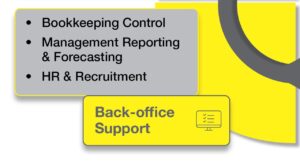
Back‑Office Support: Financial Control and Governance
For a remote estate in the far North, Assured Hotels provided bookkeeping, management accounts, forecasting, HR support, and capex oversight — ensuring clear reporting, achievable projections, and confident decision‑making for owners and lenders.
Conclusion
A hotel turnaround succeeds when commercial focus, operational discipline, and financial control move in lockstep. These case studies show how a fully resourced approach can quickly restore stability and rebuild performance. By combining hands‑on leadership with clear reporting and achievable forecasts, this model helps owners and lenders regain confidence, protect asset value, and set a clear path toward sustainable profitability.
Please click here to book a meeting, email mgriffin@assuredhotels.co.uk or call 0203 916 5658.

UK Hotel Sector: Navigating Winter Challenges and Creating Strategic Options
The UK hotel sector remains resilient but faces significant challenges during the current Q1 seasonal trough. Rising costs, volatile revenues, and legacy financial pressures are creating strain, particularly for smaller operators. Immediate priorities include robust forecasting, cashflow management, and leveraging third-party expertise to reduce costs and improve efficiency. Strategic options such as outsourcing, turnaround planning, and positioning for acquisition or exit will help businesses navigate winter challenges and prepare for recovery.
UK Hotel Sector: Navigating Winter Challenges and Creating Strategic Options
The UK hotel sector has demonstrated resilience over the past five years, weathering enforced lockdowns and benefiting from government interventions and unexpected boosts such as the staycation boom. Hotels remain a cornerstone of the UK economy, contributing over £90 billion annually and ranking among the top five employers nationwide. However, as we move into 2026, the industry faces a new set of pressures—particularly during the winter low season, when revenues traditionally dip.
Current Landscape and Emerging Pressures
While insolvency rates have remained broadly flat compared to 2019, signs of distress are now evident, especially among small privately owned groups and standalone assets with conventional bank loans. Covenant breaches ignored during the pandemic are resurfacing, and branded or franchised operations are not immune.
Key challenges include:
- Inflationary cost increases across supply chains, despite slowing headline inflation.
- Rising payroll costs, driven by minimum wage adjustments and national insurance changes.
- Volatile revenues and weak consumer spending, limiting pricing flexibility.
- Hotels returning from government contracts, creating sudden competition and diluting demand.
- Built-up arrears and legacy losses, with financial tests reintroduced by lenders.
- High loan maturities over the next 18 months, coinciding with tighter refinancing criteria.
The pandemic-era patience from funders is ending. Businesses with underinvestment or sustained losses will find refinancing harder, as both incumbent and alternative lenders adopt stricter viability metrics.
Seasonality: A Short-Term Opportunity
We are now in Q1 and the seasonal trough, which makes proactive planning critical. While revenues are at their lowest, this period should be used to implement robust forecasting, reporting, and cashflow management to prepare for the inevitable challenges ahead. Acting now ensures readiness for the spring and summer uplift, which can provide breathing space for strategic decisions.
Strategic Solutions for Winter and Beyond
To protect stakeholder value and nationwide employment, proactive measures are essential:
- Engage Specialist Asset Managers
- Experts in distressed hotel turnaround can assess viability and implement trading or closure plans.
- Outsourcing finance, payroll, and HR functions can cut costs by up to 50%, while introducing efficiency and reducing emotional decision-making.
- Leverage Third-Party Expertise
- Broader service capabilities without long-term payroll commitments.
- Immediate improvements in operational disciplines—from sales and marketing to compliance.
- Position for Acquisition or Exit
-
- Appetite from new acquirers remains strong.
- Preparing for a medium-term exit preserves value and reassures funders.
- Clear timelines and objectives create optionality and buy time.
The Bottom Line
The next 12 months will test the sector’s adaptability. Acting during this seasonal trough is essential to mitigate winter challenges and prepare for recovery. Those who engage funders early, tighten forecasts, outsource non-core functions, and plan for strategic exits will not only survive but create options for growth in a competitive market.

10 Essential Tips for Choosing the Perfect Hotel for Your Vacation
Planning a vacation involves many details, and choosing the right hotel can significantly impact your overall experience. Here are ten essential tips to help you select the perfect hotel for your next getaway, inspired by the expertise of Assured Hotels:
Identify Your Needs and Preferences: Determine what amenities and services are most important to you, such as Wi-Fi, breakfast, a pool, or a gym.
Consider the Location: Choose a hotel that is conveniently located near the attractions or activities you plan to visit.
Read Reviews and Ratings: Look for recent reviews on travel websites to get an honest perspective from other travellers.
Check the Hotel’s Website: Visit the hotel’s official website for the most accurate information and to discover exclusive deals.
Compare Prices: Use multiple booking platforms to compare prices and find the best deal. Don’t forget to check for hidden fees.
Understand the Cancellation Policy: Ensure you are aware of the hotel’s cancellation policy to avoid any surprises in case your plans change.
Look for Special Offers: Take advantage of special offers and packages that can add value to your stay, such as free breakfast or discounted rates.
Assess Safety and Cleanliness Standards: Post-pandemic, it’s crucial to choose a hotel that adheres to high safety and cleanliness standards.
Explore Loyalty Programs: If you travel frequently, joining a hotel loyalty program can offer significant benefits and savings.
Contact the Hotel Directly: Sometimes, contacting the hotel directly can result in better rates or special accommodations that aren’t available online.
Selecting the right hotel is crucial for ensuring a memorable and stress-free vacation. By applying these tips and conducting thorough research, you can identify a hotel that meets your specific needs and enhances your overall travel experience.

Hotel Market Overview - warning signs of hotel distress
For the remainder of 2023, a sector to keep a close watch on will be hospitality, where the warning signs of hotel distress are currently more difficult to identify. In this short article we have set out intel and data which suggest true underlying performance is camouflaged .
Trading Revenue Weathering the Headwinds
The hotel and wider hospitality sector continue to prove its repeated resilience, against significant ongoing challenges, over a period now approaching 3 years. Particularly trading revenues weathering the headwinds, despite what seems to be a continually evolving permanent crises.
All very good news it would seem and rather unexpected. Particularly if we look back at early commentaries and forecasts expecting a period of years for the top-line to return to 2019 levels.
Strong Recovery Disguised?
A simple comparison with 2019 hotel bedroom demand available on SiteMinder World Hotel Index in the graphic below shows us that strong hotel demand continues and is generally on a par with pre-pandemic occupancy in the UK and across other similar economies. Additionally in the UK, bedroom pricing is pacing ahead, and therefore RevPAR should also be well ahead of where we were before the pandemic.
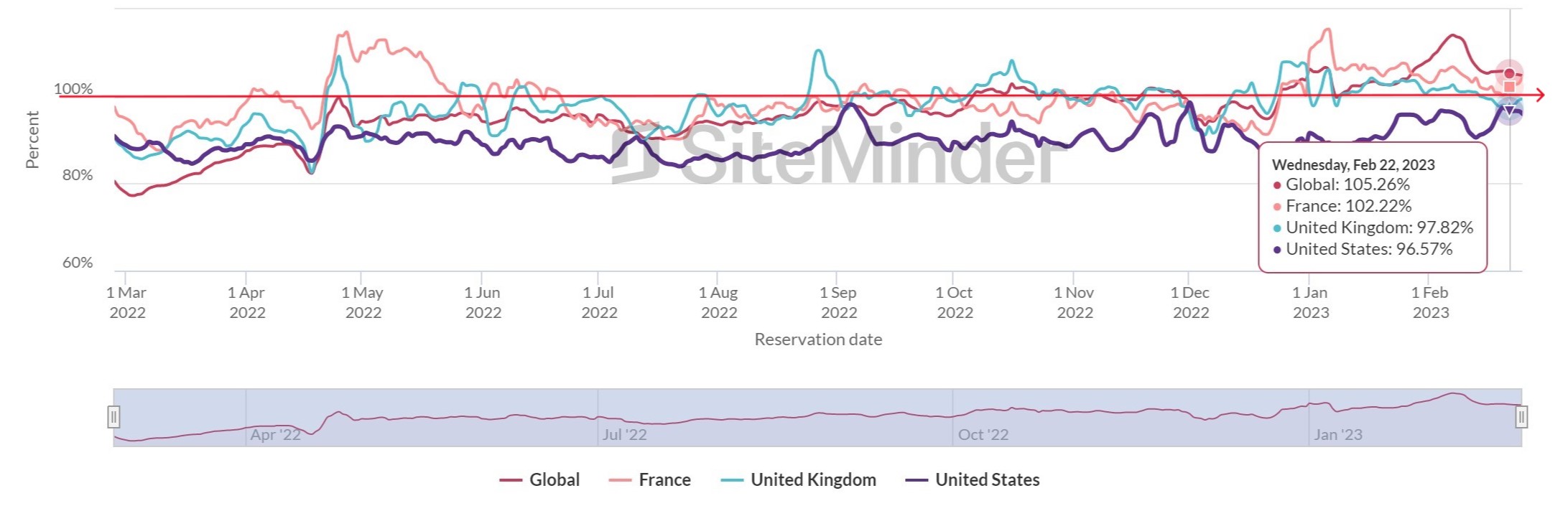
But is it all good news? It could be dangerous to look at selected truths, particularly when warning signs of hotel distress are hidden.
Bottom Line Realities
Occupancy and top-line revenues are only part of the picture. In many locations the true underlying performance has been skewed by pent up demand and changed behaviours from pandemic restrictions. This has created buoyant but fluctuating rooms performance in many locations, and on top of residual pandemic support cash, created a false recovery trends and misplaced confidence in cash flows.
Add to this the reported 200 hotels taken “off market” for use by Home Office in contracts to ease the escalating asylum crisis, we can quickly see the 2019 comparison becomes an arbitrary and inaccurate benchmark. Put another way we aren’t aware of competition capacities and demand in many locations – we know the Home Office are looking at cheaper alternatives to curb the £7m daily cost of these hotels, so contract terms need to be scrutinised.
For any individual business the only transparent reality is the bottom line. Rising costs, utilities and overheads, together with labour shortages causing salary increases and reduced operational capacities all eroding profit margins. Factor into this mix balance sheet forbearance, increased borrowing and fluctuating profit reporting amongst other lockdown legacy issues not yet addressed.
Warning signs of hotel distress, what we look for
The sector was beginning to slide in 2019 before the subsequent disruption. Since March 2020 many directors and their management teams have spent the last almost three years in survival mode. Voluntary arrangements and liquidations make up the majority of the growth in insolvency process, or down load a more user friendly snap shot of administration trends here. Additionally there hasn’t been normal creditor pressure until recently. We are also aware of many banks and funders continuing to take a back seat on loan covenants. All of this amounts to a masking of the warning signs of hotel distress.
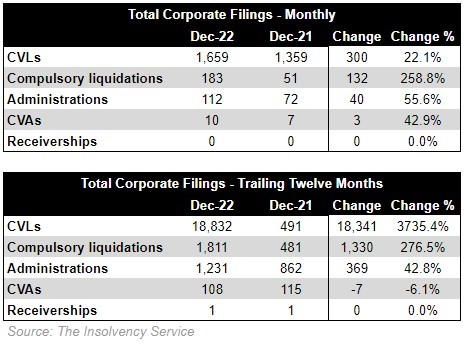
A lack of recognised checks and balances has created a disconnect between interested parties and stakeholders - a dangerous combination. Conventional trading in an economic downturn will require clear communication. A period ahead that will prove even more difficult than 2020 to 2022. We can also confidently assume that there won’t be any central support, despite the regular calls through the media.
Red flags and significant risks could therefore include:
- Management teams slow or reluctant to update forecasts and monthly MI.
- Younger management, a decade of growth since 2012, begs the question have senior personnel got the experience without support?
- Forecasts overstated & not met, don’t include cash flows. Margin squeeze not accurately reflected
- Cash running out – pandemic has created a handout culture.
- Lack of credible MI – demand/ competitor analysis, pricing & distribution strategy doesn’t reflect the current crises.
- Lack of market coverage – leisure markets have been best performers. If consumer spend contracts an over-reliance on one market would impact cash flows.
- Mid-market 3 and lower 4 star, shrinking market share, squeezed out on rate and quality by premium and limited-service hotels.
- Location & competition – pricing needs to cover inflationary pressure, but can it whilst remaining competitive?
- Unbranded owner/ operators exposed, new build pipeline.
- Valuation how has the patchy trading affected bricks and mortar value, should exit be an option?
Hotels are normally among the first to see effects of a recession, often termed the “canary in the mine”. We are seeing these distressed markers already in some regions, so early action is always essential.
Gloomy, yes, but help is at hand.
Founded in 2008, Assured Hotels is a UK based management company that offers specialist support to hotel owners and stakeholders. We have been engaged in turnaround and restructuring projects, trading insolvent businesses and in the acquisition or disposal of hotels on behalf of investors.
Assured Hotels maintain impartiality and independence free of any fixed portfolio, offering support services across all disciplines. This includes sales and revenue growth, marketing, finance and reporting, procurement, and compliance. Our flexible contracting ensures affordability, with additionally an emphasis on the development of the hotel’s senior management team. We believe this creates better returns for investors and stakeholders.
Please click here to book a meeting, email info@assuredhotels.co.uk or call 0203 916 5658.

Lambert Smith Hampton - Hotels Update April 2020
Further realistic insight from the team at LSH, positivity highlighted where opportunities will exist in the recovery phase focused on the need for adapting and embracing the new situation. Includes market commentary and some useful insights into the specific types of hotels, locations and facilities that should perform better if the right balance between flexibility, safety and hospitality is achieved.
