

Fully Resourced Hotel Turnaround That Restores Control, Credibility and Value
Fully Resourced Hotel Turnaround
The hotel transactional market is starting to move again, creating opportunities for owners to leverage expert turnaround plans to maximise value and increase options - Proof is the new leverage in hotel transactions | Hospitality Investor.
Underperforming hotels don’t need theory — they need decisive action. Assured Hotels delivers a fully resourced turnaround solution that unites commercial strategy, operational discipline, and financial control to restore performance at pace. Our independent, multi‑disciplinary interventions stabilise trading, strengthen reporting, and give stakeholders the clarity required to support refinance, restructuring, or exit.
Recent case studies show how our integrated approach — spanning revenue management, sales and marketing, operational oversight, cost control, and back‑office governance — provides the structure and commercial engine required to improve owner options.
Assured Hotels are also uniquely positioned to bring capital‑backed solutions, partnering with trusted finance providers to fund essential investment and catch‑up projects that unlock trading performance and sustain value growth.
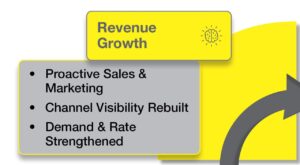
Revenue Management: Rebuilding Visibility, Demand and Rate Strength
A 31‑bedroom hotel in administration suffered from weak pricing, poor digital visibility, and over‑reliance on leisure trade. Assured Hotels implemented a focused revenue strategy:
- Improved OTA visibility through structured room types, refreshed photography, and clearer rate plans.
- Introduced dynamic pricing with demand‑driven models and daily reviews.
- Expanded distribution, including GDS onboarding and renewed corporate agreements.
- Strengthened direct bookings by clarifying offers and streamlining user journeys.
- Developed segmented products for corporate and leisure markets.
This repositioned the hotel to attract higher‑value guests, strengthening occupancy and rates.
Sales & Marketing: Putting the Hotel Back on the Map
With no active sales plan, corporate accounts lacked awareness and MICE planners had no visibility of facilities. Assured Hotels delivered:
- Audit of lapsed and potential accounts
- Re‑established preferred agreements
- Targeted outreach to MICE planners
- Campaigns to drive business and leisure demand
- Improved rate parity and booking pathways
Outcome: The hotel regained visibility, credibility, and market share across key segments, driving rapid topline growth.
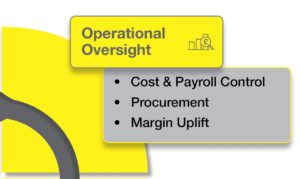
Operational Oversight: Cost Control and Efficiency
A 150‑bed West Country hotel lacked systems to control payroll, food and beverage cost, and purchasing. A system review introduced:
- Forecast‑aligned payroll models
- Purchase order controls and supplier nominations
- Menu and pricing reviews
- Regular stock takes and variance checks
Results included payroll aligned to benchmarks, stabilised cost of sales, improved cash margin, and increased profitability without compromising guest experience.
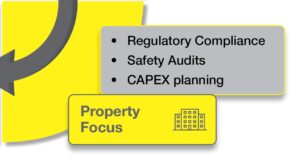
Property Management Expertise
For an 80‑bed independent hotel on the south coast, we agreed a comprehensive property‑management approach that prioritised asset improvements which had been neglected and long‑term commercial resilience. Our team supported on site management to strengthen the hotel’s compliance position, tightened safety standards, and introduced a structured programme of planned investment to maximise revenue growth.
Alongside day‑to‑day oversight, AH then oversaw all CAPEX projects designed to an agreed ROI. Where these critical works required additional funding to maintain momentum, AH was also able to introduce capital for priority projects, ensuring the hotel could continue trading confidently while enhancing its commercial potential
Strengthening Kitchen Management
An internal audit score of 44% highlighted weak compliance and food safety practices. Targeted training, improved documentation, reorganised storage, and monthly audits quickly improved scores and restored safe trading conditions.
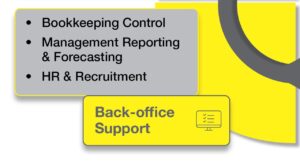
Back‑Office Support: Financial Control and Governance
For a remote estate in the far North, Assured Hotels provided bookkeeping, management accounts, forecasting, HR support, and capex oversight — ensuring clear reporting, achievable projections, and confident decision‑making for owners and lenders.
Conclusion
A hotel turnaround succeeds when commercial focus, operational discipline, and financial control move in lockstep. These case studies show how a fully resourced approach can quickly restore stability and rebuild performance. By combining hands‑on leadership with clear reporting and achievable forecasts, this model helps owners and lenders regain confidence, protect asset value, and set a clear path toward sustainable profitability.
Please click here to book a meeting, email mgriffin@assuredhotels.co.uk or call 0203 916 5658.


UK Hotel Sector: Navigating Winter Challenges and Creating Strategic Options
The UK hotel sector remains resilient but faces significant challenges during the current Q1 seasonal trough. Rising costs, volatile revenues, and legacy financial pressures are creating strain, particularly for smaller operators. Immediate priorities include robust forecasting, cashflow management, and leveraging third-party expertise to reduce costs and improve efficiency. Strategic options such as outsourcing, turnaround planning, and positioning for acquisition or exit will help businesses navigate winter challenges and prepare for recovery.
UK Hotel Sector: Navigating Winter Challenges and Creating Strategic Options
The UK hotel sector has demonstrated resilience over the past five years, weathering enforced lockdowns and benefiting from government interventions and unexpected boosts such as the staycation boom. Hotels remain a cornerstone of the UK economy, contributing over £90 billion annually and ranking among the top five employers nationwide. However, as we move into 2026, the industry faces a new set of pressures—particularly during the winter low season, when revenues traditionally dip.
Current Landscape and Emerging Pressures
While insolvency rates have remained broadly flat compared to 2019, signs of distress are now evident, especially among small privately owned groups and standalone assets with conventional bank loans. Covenant breaches ignored during the pandemic are resurfacing, and branded or franchised operations are not immune.
Key challenges include:
- Inflationary cost increases across supply chains, despite slowing headline inflation.
- Rising payroll costs, driven by minimum wage adjustments and national insurance changes.
- Volatile revenues and weak consumer spending, limiting pricing flexibility.
- Hotels returning from government contracts, creating sudden competition and diluting demand.
- Built-up arrears and legacy losses, with financial tests reintroduced by lenders.
- High loan maturities over the next 18 months, coinciding with tighter refinancing criteria.
The pandemic-era patience from funders is ending. Businesses with underinvestment or sustained losses will find refinancing harder, as both incumbent and alternative lenders adopt stricter viability metrics.
Seasonality: A Short-Term Opportunity
We are now in Q1 and the seasonal trough, which makes proactive planning critical. While revenues are at their lowest, this period should be used to implement robust forecasting, reporting, and cashflow management to prepare for the inevitable challenges ahead. Acting now ensures readiness for the spring and summer uplift, which can provide breathing space for strategic decisions.
Strategic Solutions for Winter and Beyond
To protect stakeholder value and nationwide employment, proactive measures are essential:
- Engage Specialist Asset Managers
- Experts in distressed hotel turnaround can assess viability and implement trading or closure plans.
- Outsourcing finance, payroll, and HR functions can cut costs by up to 50%, while introducing efficiency and reducing emotional decision-making.
- Leverage Third-Party Expertise
- Broader service capabilities without long-term payroll commitments.
- Immediate improvements in operational disciplines—from sales and marketing to compliance.
- Position for Acquisition or Exit
-
- Appetite from new acquirers remains strong.
- Preparing for a medium-term exit preserves value and reassures funders.
- Clear timelines and objectives create optionality and buy time.
The Bottom Line
The next 12 months will test the sector’s adaptability. Acting during this seasonal trough is essential to mitigate winter challenges and prepare for recovery. Those who engage funders early, tighten forecasts, outsource non-core functions, and plan for strategic exits will not only survive but create options for growth in a competitive market.